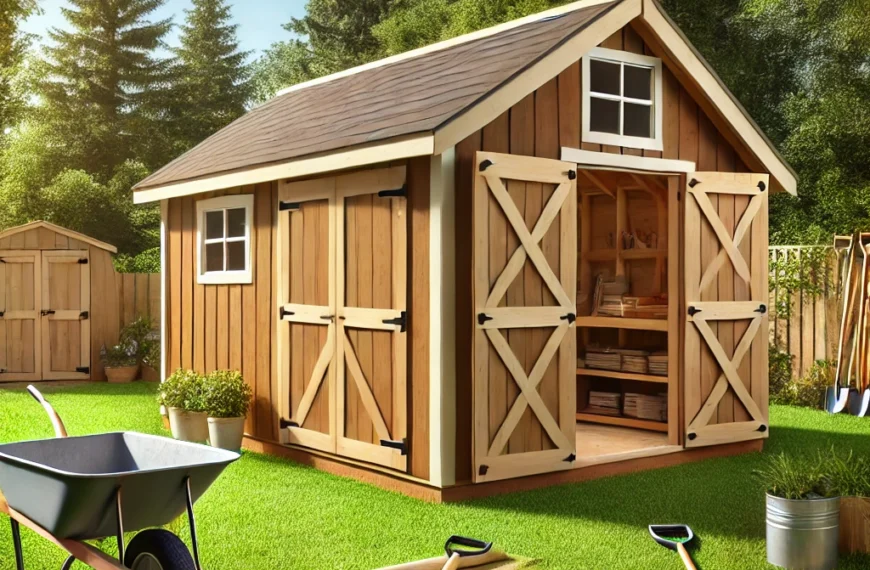

Introduction: Build the Garden Shed of Your Dreams

Tired of tripping over the lawnmower in the garage? Dreaming of a dedicated, organized space for your gardening tools, a quiet workshop, or a charming potting station? Building your own garden shed is more than just a weekend project—it’s an investment in your home, your hobbies, and your peace of mind. This guide is your comprehensive blueprint for turning that dream into a sturdy, functional reality.
Why Build Your Own Garden Shed?
While pre-built sheds are an option, the DIY route offers a unique combination of benefits that put you in complete control. The sense of accomplishment you’ll feel is just the beginning.
- Total Customization: You are the architect. Unlike one-size-fits-all kits, building from plans allows you to tailor every detail. Need a wider door for your ride-on mower, an extra window for more natural light, or custom-height shelving for specific toolboxes? You can easily modify the plans to fit your exact needs.
- Significant Cost Savings: The single biggest expense in any construction project is often labor. By providing the labor yourself, you can invest your budget directly into higher-quality materials, better roofing, or a more robust foundation, resulting in a superior shed for a fraction of the cost.
- Unbeatable Satisfaction: There is immense pride in creating something tangible and useful with your own hands. Every time you store a tool or admire your handiwork, you’ll be reminded of the skill and effort you put into it.
Your Roadmap to Shed-Building Success
We’ve designed this ultimate guide to eliminate guesswork and empower you at every stage of the process. Think of this as your personal project manager, providing everything you need from start to finish. Inside, you will find:
- A Curated Selection of Free Plans: Detailed, downloadable PDF plans for various shed sizes and styles.
- Complete Material & Cut Lists: Take the stress out of shopping with comprehensive lists that tell you exactly what to buy and how to cut it.
- An At-a-Glance Comparison Table: Quickly compare features, footprints, and complexity to find the perfect plan for you.
- A Step-by-Step Building Overview: We’ll walk you through the core construction phases, from foundation to framing to roofing.
Before you start swinging a hammer, it’s crucial to plan for a safe and successful build. We strongly recommend reading our safety section and, most importantly, checking with your local municipal office about building codes and permit requirements. A quick call beforehand can save you from costly mistakes and ensure your new shed is built to last. Let’s get started
Before You Build: Planning Your Perfect Shed Project

A successful shed project starts long before the first board is cut. This planning phase is the most critical step to ensure the structure you build meets your needs, fits your budget, and complies with local rules. By thinking through these key details now, you’ll save yourself time, money, and headaches down the road.
Your Pre-Build Blueprint
Before downloading a plan, take a moment to define your project’s scope. Answering these questions will help you choose the perfect shed and prepare for a smooth building process.
-
Define Your Shed’s Size and Purpose
Think about both your current and future needs. A shed solely for garden tools has very different requirements than a workshop or a storage space for a riding mower.
- Small (e.g., 8×12 ft): Ideal for storing lawnmowers, rakes, shovels, and seasonal decor. It’s a great choice for smaller yards where space is a premium.
- Medium (e.g., 10×12 ft): This popular size offers more flexibility, comfortably housing a riding mower, a wheelbarrow, and a small workbench area.
- Large (e.g., 12×24 ft): Functions as a true outdoor extension. This size is perfect for a full-fledged workshop, a “she-shed” retreat, a home gym, or storing large items like kayaks and ATVs.
-
Select a Foundation and Check Local Regulations
Your shed’s stability depends entirely on its foundation. The size of your shed and local code will often determine which type you need.
- Gravel Pad: An excellent, cost-effective choice for most sheds up to 120 square feet. It’s DIY-friendly and provides great drainage.
- Concrete Slab: The most permanent and stable option. A concrete slab is recommended for larger sheds, workshops with heavy machinery, or any structure you plan to insulate and finish.
Crucial Step: Before you buy a single 2×4, call your local municipal planning or building department. Ask two simple questions: “What are the setback requirements for an accessory structure?” and “At what size does a shed require a building permit?” This five-minute call will ensure your project is compliant from day one.
-
Assess Your Budget, Tools, and Skill Level
Be realistic about your resources. Our free plans include detailed material lists, which are your best tool for creating an accurate budget. Simply take the list to a local lumber yard for up-to-date pricing.
- Essential Toolkit: Nearly all our shed plans can be built with a core set of tools: a circular saw, power drill, tape measure, level, and a speed square.
- Skill Level: Our plans clearly mark whether they are for beginners or require intermediate skills. Beginner plans typically involve straightforward cuts and simpler roof designs, while intermediate plans may include more complex angles or finishing details.
Comparison Table: Find Your Ideal Shed Plan at a Glance
Choosing the right shed plan is the most critical first step. To simplify your decision, we’ve organized our top free plans into this easy-to-scan comparison table. Use it to quickly assess which design best fits your space, budget, skill set, and storage needs. Find the perfect match, then jump to the detailed plan section for your free PDF download.
| Plan Name | Dimensions (W x L) | Skill Level | Estimated Cost | Best For |
|---|---|---|---|---|
| The Compact Keeper | 4′ x 6′ | Beginner | $ | Basic tool & supply storage |
| The Weekend Gable | 8′ x 8′ | Beginner | $$ | Lawn mower & garden equipment |
| The Gardener’s Nook | 8′ x 12′ | Intermediate | $$ | Potting bench & organized storage |
| The Homesteader | 10′ x 12′ | Intermediate | $$$ | Small workshop or riding mower |
| The Craftsman’s Workshop | 12′ x 16′ | Advanced | $$$$ | Full workshop & hobby space |
How to Interpret the Comparison Table
To get the most out of the table above, it helps to understand what each category means for your project.
- Dimensions: This is the shed’s footprint. Before choosing, measure your available yard space, leaving at least 3 feet of clearance on all sides for construction and maintenance. A 4′ x 6′ shed is perfect for rakes and shovels, while a 12′ x 16′ space can become a dedicated workshop.
-
Skill Level: This estimates the complexity of the build.
- Beginner: These plans use simple, straight cuts and basic framing techniques. Ideal for your first-ever construction project.
- Intermediate: Assumes you are comfortable with a circular saw and have some framing experience. May include more complex roof angles or window installations.
- Advanced: Requires precise measurements and cuts. These plans often feature intricate details like custom trusses, multiple windows, or complex rooflines.
- Estimated Cost: This provides a relative cost for materials ($ = Lowest, $$$$ = Highest).
Important: This is only an estimate. Actual costs will vary significantly based on your location, local lumber prices, and your choice of siding, roofing, and foundation materials. Always get a specific quote for your chosen material list before starting.
- Best For: This column gives you an idea of the shed’s intended purpose. Consider your primary need. Are you just trying to get the lawn mower out of the garage, or do you dream of a dedicated space for woodworking with power tools? Matching your goal to this column is the fastest way to narrow your choices.
Free Shed Plans with Materials List PDF Downloads
Here you’ll find our curated collection of free, downloadable shed plans. Each plan is designed for a specific skill level and purpose, and crucially, comes with a complete, itemized materials list. This takes the guesswork out of your project, helping you budget accurately and ensure you have every nut, bolt, and board before you start.
The Compact Organizer: 8×12 Storage Shed
- Difficulty: Beginner
- Best For: First-time builders, garden tool storage, and freeing up garage space.
-
Key Features:
- Classic Gable Roof: A straightforward design that is excellent at shedding rain and snow.
- Wide Single Door: Provides easy access for lawnmowers, wheelbarrows, and bicycles.
- Simple Foundation: Designed for a basic skid or concrete block foundation, minimizing site preparation.
- Efficient Footprint: Offers 96 square feet of storage without overwhelming your backyard.
Download the complete 8×12 Storage Shed Plans PDF and the corresponding 8×12 Materials List PDF to get started.
The Hobbyist’s Haven: 10×12 Workshop Shed
- Difficulty: Intermediate
- Best For: Woodworkers, crafters, or anyone needing a dedicated project space.
-
Key Features:
- Ample Natural Light: Includes framing for one or more windows, essential for a functional workspace.
- Reinforced Floor System: Built to handle the weight of heavy workbenches, tool chests, and machinery.
- Generous Headroom: The design allows for comfortable movement and the installation of overhead lighting or tool storage.
- Optional Ramp: Plans include instructions for adding a ramp for easy movement of wheeled carts and equipment.
Find everything you need in the 10×12 Workshop Shed Plans PDF and the detailed 10×12 Materials List PDF.
The Homesteader’s Hub: 12×24 Multi-Purpose Barn
- Difficulty: Advanced
- Best For: Storing large equipment, creating a dual-purpose studio/storage space, or as a small vehicle garage.
-
Key Features:
- Gambrel “Barn” Roof: This iconic roof style maximizes overhead space, creating a perfect loft for extra storage.
- Dual-Access Design: Features wide double doors for large items and a separate side entry door for convenient everyday use.
- Expansive Interior: With 288 square feet of floor space, the possibilities are nearly endless.
- Robust Framing: Engineered to support a larger structure, ensuring long-term durability. This plan is best suited for a concrete slab foundation.
Your project awaits. Download the 12×24 Multi-Purpose Barn Plans PDF and the comprehensive 12×24 Materials List PDF.
The Core Building Process: A Step-by-Step Overview
While your chosen PDF plan will provide exact measurements and instructions, most shed construction projects follow the same fundamental sequence. Think of this as your roadmap from a patch of grass to a finished structure. Always refer to your specific plan for details, but here’s the general order of operations.
Phase 1: The Foundation and Floor
This is the most critical phase, as everything else rests on it. A poor foundation leads to a weak shed.
- Site Preparation and Foundation: First, you must create a level and stable base. This involves clearing vegetation, grading the soil, and adding a layer of compacted gravel. For your foundation, you might use simple concrete deck blocks for a small shed or pour a full concrete slab for a larger, more permanent workshop.
Best Practice: Use a string line and stakes to ensure your foundation area is perfectly square before you begin.
- Constructing the Floor Frame: Next, you’ll build the floor. This typically involves creating a rectangular frame from pressure-treated lumber (joists) that sits directly on your foundation. You’ll install interior joists, often spaced 16 inches apart, for support. Once the frame is assembled and squared, you’ll cover it with thick plywood or OSB (Oriented Strand Board) to create the shed’s floor deck.
Phase 2: Framing the Structure
With the floor complete, you’ll build the skeleton of your shed.
- Framing and Raising the Walls: You will assemble the four wall frames flat on the shed floor. Each frame consists of a top plate, a bottom plate, and vertical studs in between. Your plan will specify precise locations for window and door openings (headers). With the help of a friend, you’ll lift each wall into place, brace it temporarily, and then secure it to the floor and to the adjacent walls.
- Building the Roof Structure: The roof is typically built using either rafters or trusses. Trusses are triangular frames you can often build on the ground and then lift into place. Rafters are cut individually and installed one by one to form the roof’s pitch. Your plans will detail which method to use and provide the necessary angles and measurements.
Phase 3: Enclosing and Finishing
The final phase is all about protecting your shed from the elements and adding the finishing touches.
- Sheathing, Roofing, and Siding: Once the frame is complete, you will cover the exterior walls and roof with sheathing (plywood or OSB). On the roof, you’ll add a weather-resistant barrier (like tar paper) followed by your final roofing material, such as asphalt shingles or metal panels. On the walls, you’ll install siding over a house wrap to make it weatherproof.
- Doors, Windows, and Trim: Finally, install your pre-hung or custom-built door and any windows. The last step is to add the trim—the exterior boards that cover corners, frame the door and windows, and run along the roofline (fascia). Trim covers seams, seals gaps, and gives your shed a clean, professional look before its final coat of paint or stain.
Safety First: Essential Precautions for Your Project
Building your own shed is an incredibly rewarding experience, but your safety is the most important tool in your entire project. Before you make the first cut or drive the first screw, commit these essential precautions to memory. A safe build is a successful build.
Your Non-Negotiable Personal Protective Equipment (PPE)
Don’t even think about starting without the right gear. PPE is your first line of defense against common workshop injuries.
- Safety Glasses or Goggles: This is mandatory. Wood chips, dust, and stray fasteners can cause permanent eye damage. Always wear them when cutting, drilling, or nailing.
- Work Gloves: Protect your hands from splinters when handling rough lumber and prevent blisters during repetitive tasks. Choose a pair that offers good dexterity.
- Sturdy, Closed-Toe Footwear: Steel-toed boots are ideal. Dropping a heavy 4×4 post or a power tool on your foot can end your project instantly.
- Dust Mask or Respirator: Sawdust, especially from pressure-treated lumber or MDF, is harmful to your lungs. Wear a mask for any cutting or sanding operations.
Safe Power Tool Operation
Power tools make the job faster, but they demand respect. Familiarize yourself with your tools before the project begins.
- Read the Manual: Every tool is different. Understand its specific features, safety guards, and maintenance requirements.
- Keep Guards in Place: Never remove or disable the safety guards on tools like circular saws or miter saws. They are there for a reason.
- Use Sharp Blades and Bits: A dull blade requires more force, which increases the risk of kickback and creates rough, inaccurate cuts. A sharp blade works more efficiently and safely.
- Secure Your Workpiece: Use clamps to hold lumber firmly in place while you cut or drill. Never use your hand to stabilize a small piece near the blade.
- Disconnect Power: Always unplug tools before changing blades, bits, or making adjustments.
Pro-Tip: Maintain a clean and organized work area. Tripping over extension cords, scrap wood, or tools is a leading cause of workshop accidents.
Lifting and Handling Heavy Materials
A shed involves heavy components, from sheets of plywood to fully assembled wall frames. Improper lifting can lead to serious back injuries.
- Lift with Your Legs: Keep your back straight, bend at your knees, and use your leg muscles to lift heavy items. Hold the load close to your body.
- Don’t Be a Hero: For large or awkward materials like roof trusses or 4’x8′ sheets of sheathing, always ask for a helper. Many steps, like raising walls, are unsafe to do alone.
- Plan Your Moves: Before you lift, clear a path to where you are going. Know where you will set the material down to avoid awkward shuffling and potential strains.
Join the Community: See What Others Have Built!
You’ve downloaded the plans and gathered your materials—now it’s time for the most powerful motivation of all: seeing what’s possible! There’s nothing more inspiring than seeing a set of plans transformed into a finished, functional, and beautiful structure by a fellow DIY enthusiast just like you. This is where the plans come to life.
Inspiration from the DIY Community
Our gallery of reader-submitted projects is a treasure trove of ideas and real-world insights. Before you make your first cut, take a moment to explore how others have tackled their builds. You’ll discover a wealth of practical knowledge that goes beyond the blueprints.
- Creative Customizations: See how builders have adapted our core plans. This includes adding extra windows for a potting shed, installing a ramp for easy mower access, or choosing unique paint colors and siding to match their home’s aesthetic.
- Real-World Tips: Learn from the experiences of others. You might find a testimonial from a builder who recommends pre-staining all wood before assembly to save time, or another who shares their clever solution for building a level foundation on a sloped yard.
- Proof of Success: Building a shed is a significant undertaking. Seeing dozens of successfully completed projects provides the confidence and motivation you need to start—and finish—your own.
Share Your Shed & Help the Next Builder
Once your project is complete, your journey isn’t over! Your experience is incredibly valuable to the next person starting out. By sharing your finished shed, you contribute to a growing community of builders helping each other succeed.
We would be thrilled to feature your work. To share your project, simply send us an email with the following:
- High-Quality Photos: Include a few clear shots of your finished shed. We love to see different angles, interior shots, and even an “in-progress” picture!
- Which Plan You Used: Let us know which of our free plans was the starting point for your build.
- Your Story & Top Tip: Briefly describe your experience. What was the biggest challenge? What are you most proud of? Most importantly, what is the #1 piece of advice you would give a first-time shed builder?
Your project could be the inspiration that helps someone else build the garden shed of their dreams.
Frequently Asked Questions (FAQ) about DIY Plans for Garden Sheds
How much does it really cost to build your own shed?
The final cost of a DIY shed varies significantly based on a few key factors. While our free plans eliminate design costs, materials will be your main expense. Expect a basic 8×10 foot shed to cost anywhere from $1,500 to $3,500. Larger or more elaborate structures can easily exceed $5,000.
Here’s what influences the price tag:
- Size and Complexity: A simple 6×8 lean-to shed will be far cheaper than a 12×16 gambrel-roofed barn-style shed.
- Materials: Standard pressure-treated pine and T1-11 siding are cost-effective choices. Upgrading to cedar, vinyl siding, or architectural shingles will increase the budget.
- Foundation: A simple on-grade gravel pad is the most affordable option. A permanent concrete slab foundation is more expensive but offers maximum stability.
- Finishing Details: The cost of windows, doors, paint, shelving, and electrical work can add up quickly.
Pro Tip: Always budget an extra 10-15% for unexpected costs, like warped lumber that needs replacing or extra hardware.
Can a complete beginner really build a shed from these plans?
Yes, a motivated beginner can successfully build a shed using our detailed plans. We design them with clear instructions, cut lists, and diagrams. However, success depends on your willingness to learn and be patient.
If you are new to construction, we recommend you:
- Start Small: Choose one of the simpler, smaller shed plans first. A basic gable or lean-to shed is a perfect first project.
- Master the Basics: Before you start, get comfortable using essential tools like a circular saw, power drill, speed square, and level. Practice making straight, accurate cuts on scrap wood.
- Ask for Help: Building a shed is much easier and safer with a partner, especially when raising walls and setting roof trusses.
How long does it take to build a garden shed?
For a standard 8×10 or 10×12 shed, a moderately skilled DIYer working with a helper should plan for 3 to 5 full weekends.
- Weekend 1: Site preparation and building the foundation. Don’t underestimate the time this takes!
- Weekends 2-3: Framing the floor, walls, and roof.
- Weekends 4-5: Installing siding, roofing, trim, doors, and windows, followed by painting.
Working alone will extend this timeline. The key is to work safely and methodically, not to rush.
What’s the best and cheapest foundation for a shed?
Choosing the right foundation is a balance of cost, effort, and longevity.
- Cheapest & Most Common: Gravel Pad Foundation. This involves creating a level timber frame (often with 4x6s) and filling it with several inches of compacted gravel. It provides excellent drainage and is perfectly suitable for most garden sheds. It’s the top choice for balancing cost and performance.
- Best for Durability: Concrete Slab. A poured concrete slab offers the ultimate in permanence and stability. It’s the best choice for very large sheds, workshops, or if you plan to store extremely heavy equipment like a riding mower. However, it is the most expensive and labor-intensive option.
Frequently Asked Questions (FAQ) about DIY Plans for Garden Sheds
Why should I build my own shed instead of buying a pre-built one?
Building your own garden shed from DIY plans offers several significant advantages over purchasing a pre-built model. The primary benefits include:
- Total Customization: You have complete control over the design. You can modify plans to include a wider door for a riding mower, add extra windows for more light, or build custom shelving to fit your specific tools and equipment.
- Significant Cost Savings: Labor is a major expense in construction. By doing the work yourself, you can allocate more of your budget towards higher-quality materials, such as better roofing or a more durable foundation, resulting in a superior shed for less money.
- Unbeatable Satisfaction: There is a great sense of pride and accomplishment that comes from building something tangible with your own hands. You’ll appreciate the finished product more knowing the effort and skill you invested in it.
What are the most important things to plan before I start building?
A successful shed project relies on thorough planning before any construction begins. The most critical steps to take during this phase are:
- Define the Shed’s Size and Purpose: Determine what you will use the shed for both now and in the future. Will it be for simple tool storage (small), a riding mower and small workbench (medium), or a full workshop or “she-shed” (large)? This will dictate the necessary footprint.
- Check Local Regulations and Obtain Permits: This is a crucial step. Before you even choose a plan, contact your local municipal office to inquire about building codes, permit requirements, and any property line setback rules. This can save you from costly mistakes and legal issues.
- Select an Appropriate Foundation: The stability of your shed depends on its foundation. The right choice, such as a gravel pad or a concrete slab, will depend on your shed’s size, your local climate, and the building codes in your area.
How do I choose the right size shed for my needs?
Choosing the right size depends on what you plan to store and how you intend to use the space. The guide suggests considering these common sizes as a starting point:
- Small (e.g., 8×12 ft): This size is perfect for smaller yards and is ideal for storing basic gardening tools, a push lawnmower, shovels, rakes, and seasonal decorations.
- Medium (e.g., 10×12 ft): A popular and flexible option that provides enough room to comfortably store a riding mower, a wheelbarrow, and still have space for a small workbench and tool organization.
- Large (e.g., 12×24 ft): This size acts as a true outdoor extension of your home. It’s suitable for a full-fledged workshop, a home gym, a “she-shed” retreat, or for storing large items like kayaks, bikes, or ATVs.
Always consider your future needs to avoid outgrowing your shed too quickly.
Do I need a building permit for a DIY garden shed?
It is highly likely that you may need a permit, but this depends entirely on your local regulations. The requirement for a building permit is often determined by the shed’s size (square footage) and the type of foundation you plan to build. Some municipalities have a size threshold (e.g., under 100 sq ft) below which a permit is not required, while others have stricter rules. It is absolutely essential to check with your local municipal office or building department *before* you start your project. They can provide specific information on permit requirements, necessary inspections, and rules regarding placement on your property. A quick phone call beforehand can prevent significant fines and the potential need to tear down a non-compliant structure.